| Availability: | |
|---|---|
| Quantity: | |
Beverage Cans
Printing
Machinery

▎Product Overview
• Three-piece cans: interior (gold/white/aluminized), exterior (clear/gold/colors)
• Two-piece D&I cans: interior spray (gold/white/gray), exterior wash coats
• Two-piece DRD (steel & aluminum): interior (gold/white/aluminized), exterior (clear/gold/colors)
• Ends: sanitary & EOE/EZO; interior (gold/white/aluminized), exterior (clear/gold/colors)
• Side seam stripes: liquid (direct roll/spray)
▎How it protects
Food can coatings play a critical role in preserving the safety, quality, and shelf life of packaged foods, applied as a thin but highly durable layer on the interior surface of metal cans.
H&Z food can coatings create a reliable barrier that prevents direct contact between the metal substrate and the food product. This separation is essential for protecting the can from corrosion while also preventing unwanted chemical reactions that could affect the taste, color, or nutritional value of the food.

▎Key Features
![]() Proven retort and hot-fill performance; strong resistance to sulfur staining and acidic media During retort processing, extreme conditions can place significant stress on the coating film, potentially causing blistering, cracking, or loss of adhesion if the coating is not properly formulated. In hot-fill applications, where food is filled into the container at elevated temperatures, coatings must also resist thermal shock and maintain consistent barrier properties. Similarly, sulfur staining or acidic media such as tomatoes, fruits, and sauces can accelerate metal degradation if the packaging is not adequately protected. Advanced H&Z food can coatings create a stable, chemically resistant barrier that prevents these reactions. | ![]() Excellent adhesion, flexibility and formability through beading and seaming Food cans undergo several mechanical forming processes during manufacturing, including drawing, beading, flanging, and seaming. These processes place significant mechanical stress on both the metal substrate and the applied coating. To ensure long-term performance, food can coatings are formulated with excellent adhesion and flexibility. Strong adhesion ensures that H&Z food can coating remains firmly bonded to the metal surface throughout forming operations and throughout the entire life of the package. | ![]() Interior tone options: white, gold, aluminum-pigmented; exterior clear, gold or custom colors Food can coatings not only provide essential protection but also offer a variety of aesthetic and functional appearance options for both interior and exterior surfaces. Interior coatings are available in several tones, including white, gold, and aluminum-pigmented finishes. These interior color options can serve multiple purposes. Custom colors allow our clients to align the packaging with brand identity while still maintaining strong protective properties. H&Z also apply flexible appearance options can help you meet both technical performance requirements and marketing objectives, creating packaging that is durable, functional, and visually appealing. |
▎Main Applications
Three-piece bodies & ends Food can coatings are widely applied to three-piece can bodies and ends to provide essential protection during both manufacturing and food processing. High-performance food can coatings protect the metal from corrosion caused by moisture, acids, salts, and other reactive ingredients commonly found in food products. They also prevent metal ions from migrating into the food, preserving flavor, color, and nutritional quality. |
Two-piece: D&I inside spray; DRD interiors/exteriors Two-piece cans require specialized coating technologies to accommodate the unique manufacturing processes used to form the container. In the Drawn and Ironed process, the interior surface experiences significant mechanical stress during forming, coatings are typically applied as an internal spray after the can body is formed. For Drawn and Redrawn cans, coatings may be applied to both the interior and exterior surfaces depending on the application. |
EOE/EZO ends; side seam stripe Because the scoring process reduces the thickness of the metal in specific areas, coatings must remain extremely flexible and durable to maintain complete coverage without cracking or breaking along the score lines. Interior coatings on EOE and EZO ends protect the metal from corrosion caused by food contact, while also ensuring that the opening mechanism functions smoothly without compromising the package seal. |
▎Technologies
| BPA-NI polyester/acrylic | Epoxy-phenolic options for sulfur/retort extremes |
BPA-NI polyester and acrylic coatings are widely used in modern food can packaging as part of the industry’s move toward alternative coating technologies that meet evolving regulatory and consumer expectations. Both polyester and acrylic BPA-NI coatings are engineered to maintain a consistent protective barrier during sterilization, pasteurization, and long-term storage. | Epoxy-phenolic coatings combine the strong adhesion and chemical resistance of epoxy resins with the heat resistance and durability of phenolic resins, creating a highly robust protective system, which involve aggressive food chemistries or extreme processing conditions. They are particularly well suited for foods that contain sulfur compounds, such as meat, seafood, peas, and certain vegetables. Without proper protection, sulfur compounds can react with metal surfaces. Epoxy-phenolic coatings form a stable barrier that prevents this interaction. |
▎Compliance & Qualification
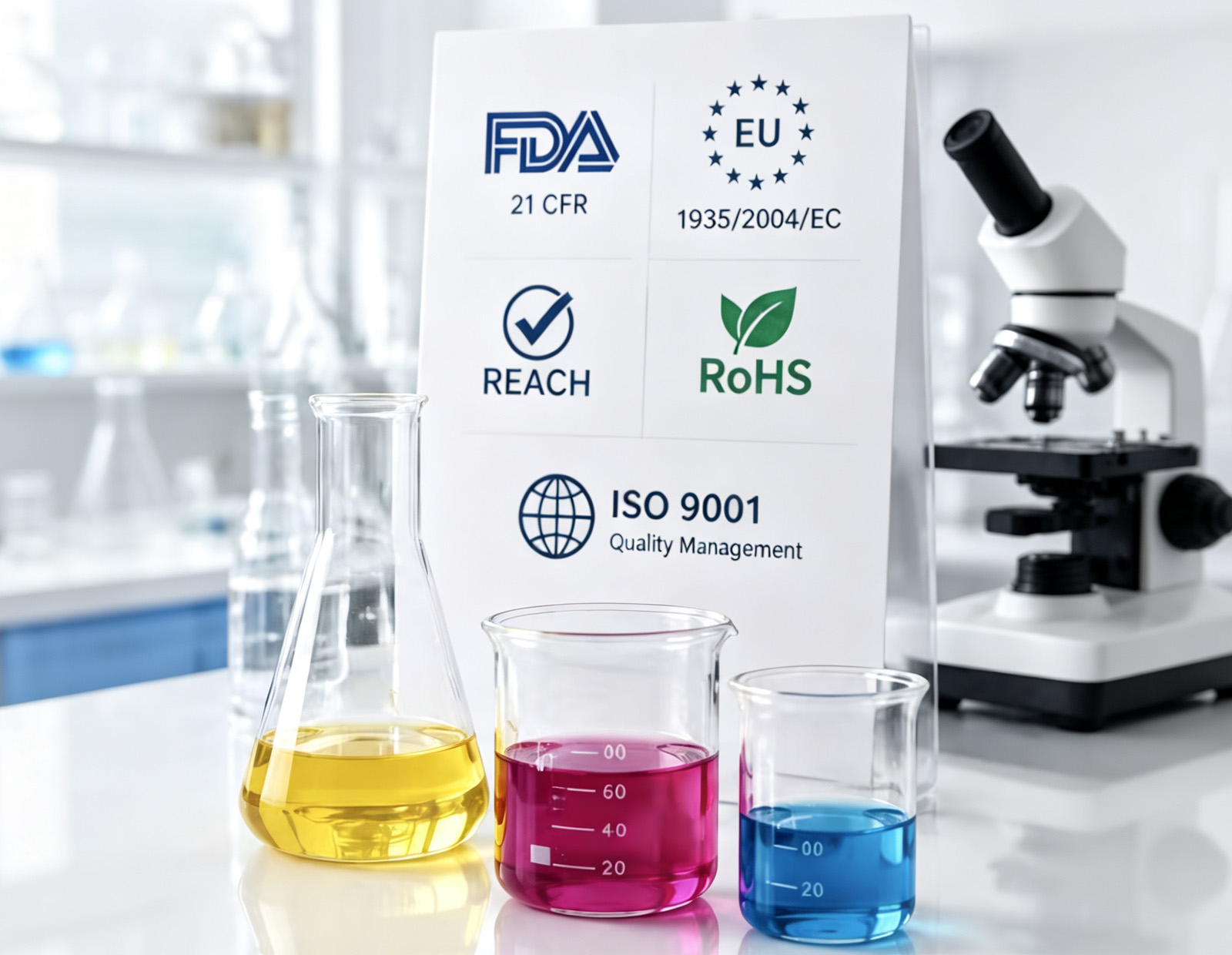
• Designed to support FDA 21 CFR 175.300, EU 1935/2004 & 2023/2006 (GMP), and applicable GB 4806 requirements()
• Application support: media compatibility matrices, retort profiles, and line implementation guidance